
Introduction
In today’s fast-paced world, taking care of our mental health has become more important than ever. Self-care practices are essential for nurturing our mental well-being, allowing us to reduce stress, increase resilience, and maintain a healthy life balance. In this blog post, we will explore some effective self-care practices that can help you prioritize and improve your mental well-being.
- Establish a Routine: Creating a daily routine can provide stability and structure to your life, which is crucial for maintaining mental well-being. Allocate time for activities that nourish your mind, body, and soul, such as exercise, meditation, hobbies, and relaxation. Ensuring you have a well-rounded routine helps build resilience to face life’s challenges.
- Prioritize Sleep: A good night’s sleep is vital for mental clarity and emotional stability. Establish a regular sleep schedule, avoid stimulating activities before bed, and create a restful environment in your bedroom. Practice relaxation techniques like deep breathing or reading a book to help you unwind and improve the quality of your sleep.
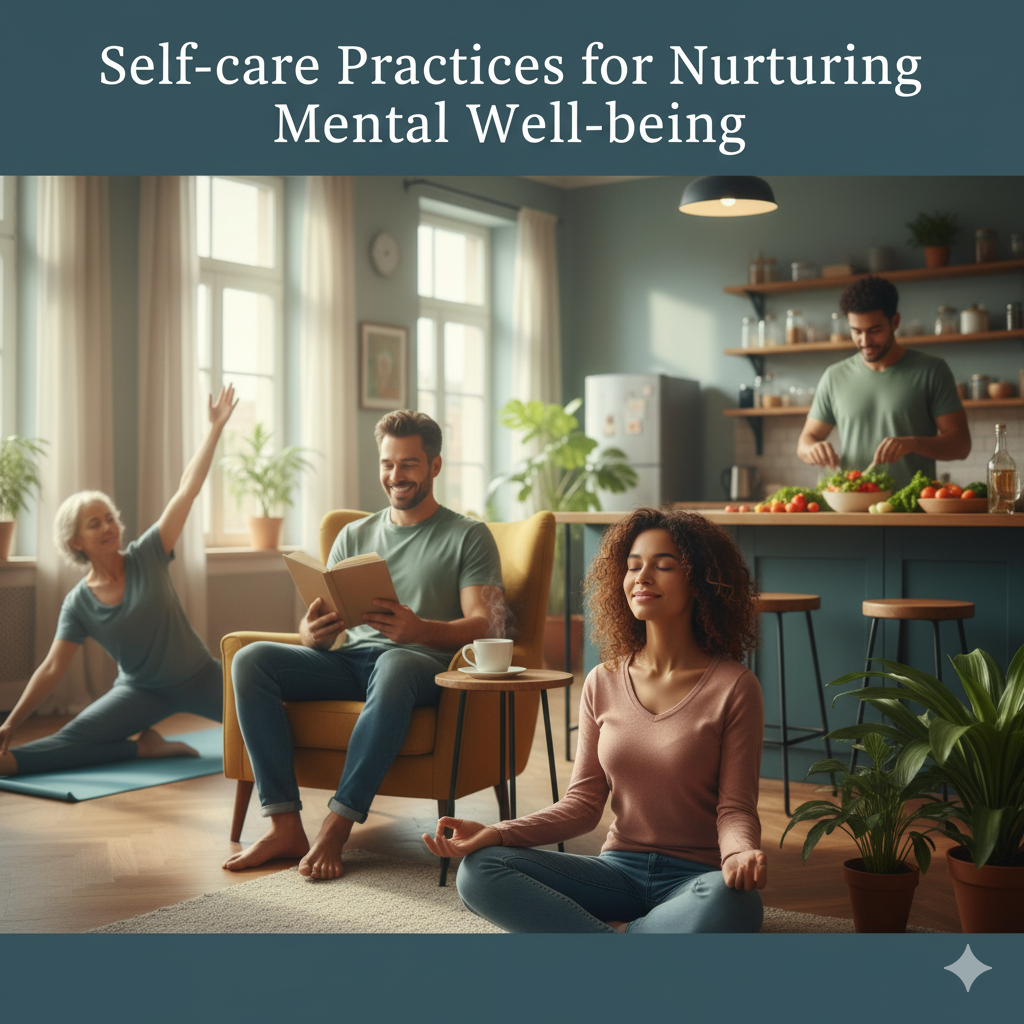
- Engage in Physical Activity: Regular exercise not only positively affects your physical health but also has a profound impact on your mental well-being. Engaging in physical activity releases endorphins, which are natural mood boosters. Find an activity that you enjoy, whether it’s going for a walk, jogging, dancing, or doing yoga. Remember, even small amounts of exercise can make a big difference.
- Practice Mindfulness and Meditation: Mindfulness and meditation are powerful practices that help you stay grounded in the present moment and cultivate a sense of calm. Take a few minutes each day to sit quietly, focus on your breath, and observe your thoughts without judgment. With consistent practice, mindfulness can help reduce stress and promote a positive mindset.
- Connect with Loved Ones: Building and maintaining strong relationships is essential for mental well-being. Carve out time to connect with your family and friends, whether through face-to-face interactions or virtual platforms. Engaging in meaningful conversations, sharing experiences, and supporting one another can help you feel connected and provide a sense of belonging.
- Allocate Time for Hobbies: Engaging in activities that bring you joy and fulfillment is an essential aspect of self-care. Find a hobby or pursue a passion that allows you to express yourself creatively or mentally energize yourself. It could be anything from painting, playing an instrument, cooking, gardening, or reading. Allowing yourself time for hobbies can help reduce stress and provide a sense of accomplishment.
- Set Boundaries: Establishing healthy boundaries is crucial for maintaining mental well-being. Learn to say no when necessary, take breaks when needed, and prioritize your own needs. Setting boundaries helps you manage stress, prevent burnout, and maintain a healthy work-life balance.
Conclusion
Prioritizing self-care practices is crucial for nurturing your mental well-being. By incorporating routine, sleep, exercise, mindfulness, quality relationships, hobbies, and boundaries into your life, you can enhance your mental resilience and overall happiness. Remember, self-care is not selfish; it is a necessary investment in your well-being. So, take some time each day to nurture your mental health and watch how it positively impacts every aspect of your life.
